
Running a Sex Offender Check in Citrus County
Begin with the official Florida Sexual Offenders and Predators Search. FDLE manages the public system for the whole state, so a county filter reaches registrations tied to Citrus County without relying on a separate city list. Name mode is useful when the person is known. Neighborhood mode is better when the concern starts with an address, ZIP code, or a place near a home, school, or other point.
The Citrus County Sheriff’s Office performs local registration and verification duties. Call 352-726-1121 for the current registration location, hours, or appointment instructions, and use the same number to report suspected noncompliance. The public registry, the sheriff, and address alerts serve different needs: FDLE displays the record, CCSO handles local compliance, and alerts watch a location for later reported changes.
Citrus County Registration and Verification
Registration is an ongoing law-enforcement process, not a one-time entry on a website. A person with a Florida duty must report residences and other information required by the applicable statute, make required updates within statutory deadlines, and complete periodic in-person verification. CCSO carries out that local work for Citrus County while FDLE maintains the public-facing statewide record.
Questions about where or when to report belong with CCSO because current appointment details can change. The official contact is Citrus County Sheriff’s Office headquarters, 1 Dr. Martin Luther King Jr. Avenue, Inverness, Florida 34450, at 352-726-1121. A caller should distinguish a registration question from an emergency or a request for a general police report.
Local verification does not create a separate Citrus County public registry. Once CCSO processes reportable facts, FDLE remains the public search source. That division matters when a profile seems stale. Questions about a local compliance visit or suspected failure to report go to the Sheriff, while technical display issues and statewide profile data belong with FDLE. Keep the profile number, displayed address, and date of the search so either agency can identify the entry without guesswork.
Searching the Florida Sexual Offenders and Predators Search
The FDLE portal offers separate name, neighborhood, and university workflows. A Citrus County registry search can be broad, such as filtering the county, or narrow, such as using a standardized street address and a portal-provided radius. Search controls may change, so use the choices shown on the live official form.
- Open the FDLE search and read its conditions and safety notice.
- Choose name, neighborhood, or university mode, then enter the most reliable facts available.
- Filter for Citrus County, a city, ZIP code, or address when place matters.
- Open a possible match and compare the full profile, address dates, classification, and current status.
| Field Label | Type | Required | Notes |
|---|---|---|---|
| Last Name | Text | Name mode | Partial matching follows the portal’s current rules. |
| First Name | Text | No | Narrows name results. |
| City / ZIP Code | Text or select | No | Use Inverness, Crystal River, or a five-digit ZIP. |
| County | Select | No | Select Citrus for a county-focused result set. |
| Street Address / Radius | Text and select | Neighborhood mode | A standardized address helps the map locate the point. |
Reading Citrus County Registry Map Pins
A map pin marks registry address data, not guaranteed real-time physical presence. Open the linked profile and compare the permanent, temporary, or transient address type, its reported date, and the person’s compliance status. A recent move, a pending update, or geocoding can make the map and the current situation look different.
If an address appears wrong, do not investigate at the location or approach anyone. Report the possible error to the registering agency. CCSO can receive a Citrus County compliance concern, and FDLE provides profile tools for reporting updates. Give the profile identifier and the specific address issue rather than speculation.
What a Citrus County Registry Profile Shows
A public FDLE profile can help distinguish people with similar names and explain why an entry appears. It is still a statutory registration record, not a full account of every arrest, charge, court outcome, or current risk. Read several fields together and use the linked offense and status details with care.
| Name & Aliases | Legal name, known aliases, and FDLE number can help resolve identity. |
|---|---|
| Photo & Physical Description | Photo date, age, sex, race, height, weight, hair and eye color, scars, marks, and tattoos may appear. |
| Registered Address | Permanent, temporary, and transient addresses may show with address dates and Citrus County. |
| Offense & Statute | Qualifying offense, jurisdiction, statute or description, conviction date, and court may appear. |
| Florida Classification | The public label is sexual offender or sexual predator, not a federal tier. |
| Registration Status | Current status, compliance information, registration dates, vehicles or vessels, and reporting links may appear. |
Official Citrus County Registry Tools
The FDLE registry interface is the primary public search for a Citrus County address or name.
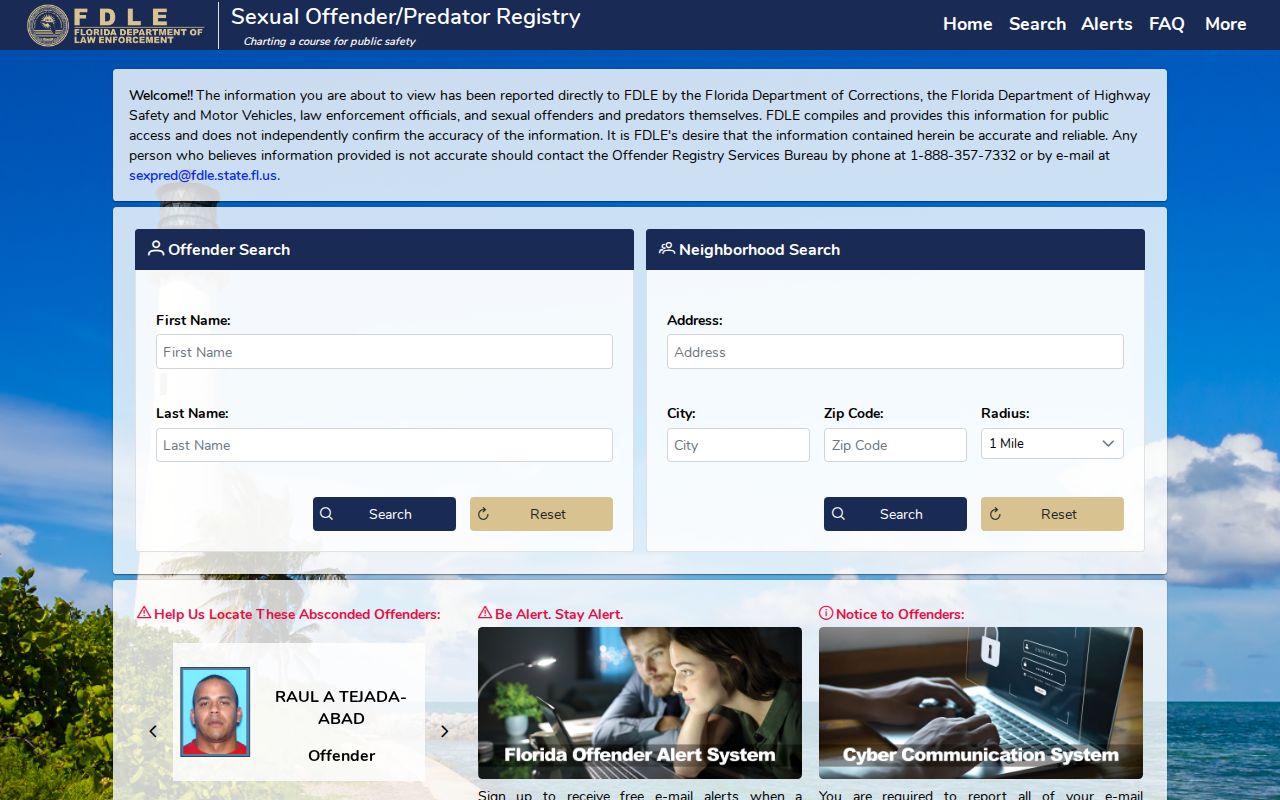
Its search modes lead from a broad county query to the detailed profile fields used to assess a possible match.
The Florida Offender Alert service adds monitoring around a chosen location.
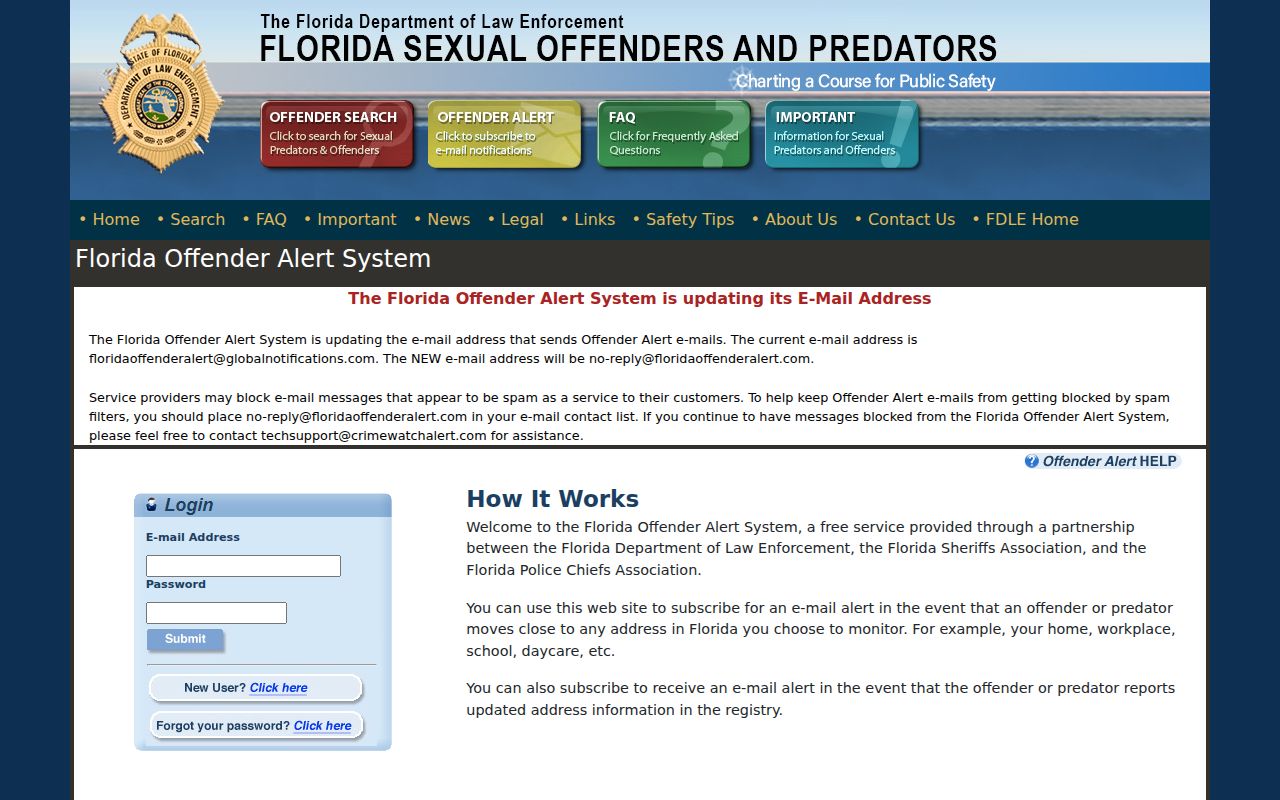
Enrollment complements a one-time Citrus County registry check by sending notice after a qualifying address is reported nearby.
Registration Requirements and Levels in Florida
Florida does not publish a simple Tier I, II, and III registry. Its key labels are sexual offender and sexual predator, with predator status arising from a court or statutory designation under section 775.21. Duration and verification depend on the qualifying law, dates, status, and any lawful relief. Many duties last for life, so a reader should not assume a federal tier schedule.
| Level / Tier | Duration | Verification Frequency |
|---|---|---|
| Sexual offender | Often lifetime, subject to the governing statute and limited removal routes | Periodic in-person verification under the applicable law |
| Sexual predator | Generally lifetime | Enhanced verification and community-notification duties |
| Juvenile or special category | Depends on the specific statute and court treatment | Do not infer adult duties from the public label |
Citrus County Search Versus NSOPW
FDLE is the best first source for a person or address tied to Citrus County. The U.S. Department of Justice National Sex Offender Public Website federates participating jurisdictions, which makes it useful when someone may have moved across state lines.
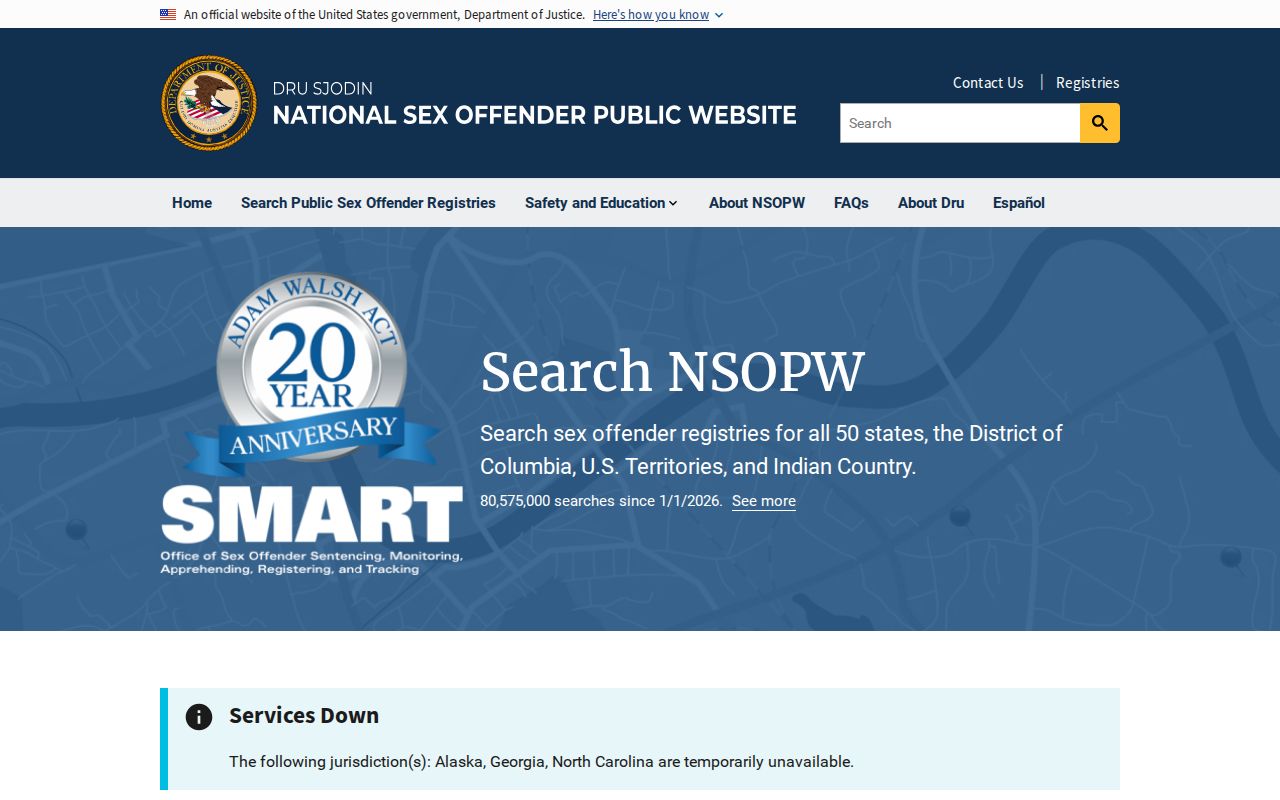
NSOPW broadens geographic reach, while the FDLE profile remains the direct source for Florida registration details and local status.
A no-result response from either source is not a general background check. Registries list people who meet registration statutes, not everyone who has had a sex-offense allegation or case. Spelling, aliases, jurisdiction, and current public eligibility can also affect results.
When a possible match spans jurisdictions, note the FDLE number, legal name, aliases, and last reported address before opening the national search. Compare the underlying state profile rather than treating duplicate result cards as separate people. For a Florida record, FDLE remains the source that can explain a status or receive a correction report. For a record maintained by another state or territory, follow NSOPW to that jurisdiction’s official registry and use its contact channel.
A cross-state result also needs a date check. Compare the Florida address date, the other jurisdiction's status, and any relocation note before deciding which profile is current. If two official entries conflict, contact the registry that owns each record. Do not fill the gap with a commercial people-search page or an old copied list. Official registries can review their own reporting history and explain which agency must verify an address.
Florida Law Behind Citrus County Profiles
Two Florida statutes frame much of what appears publicly. Section 943.0435 addresses sexual-offender registration duties and reportable information.
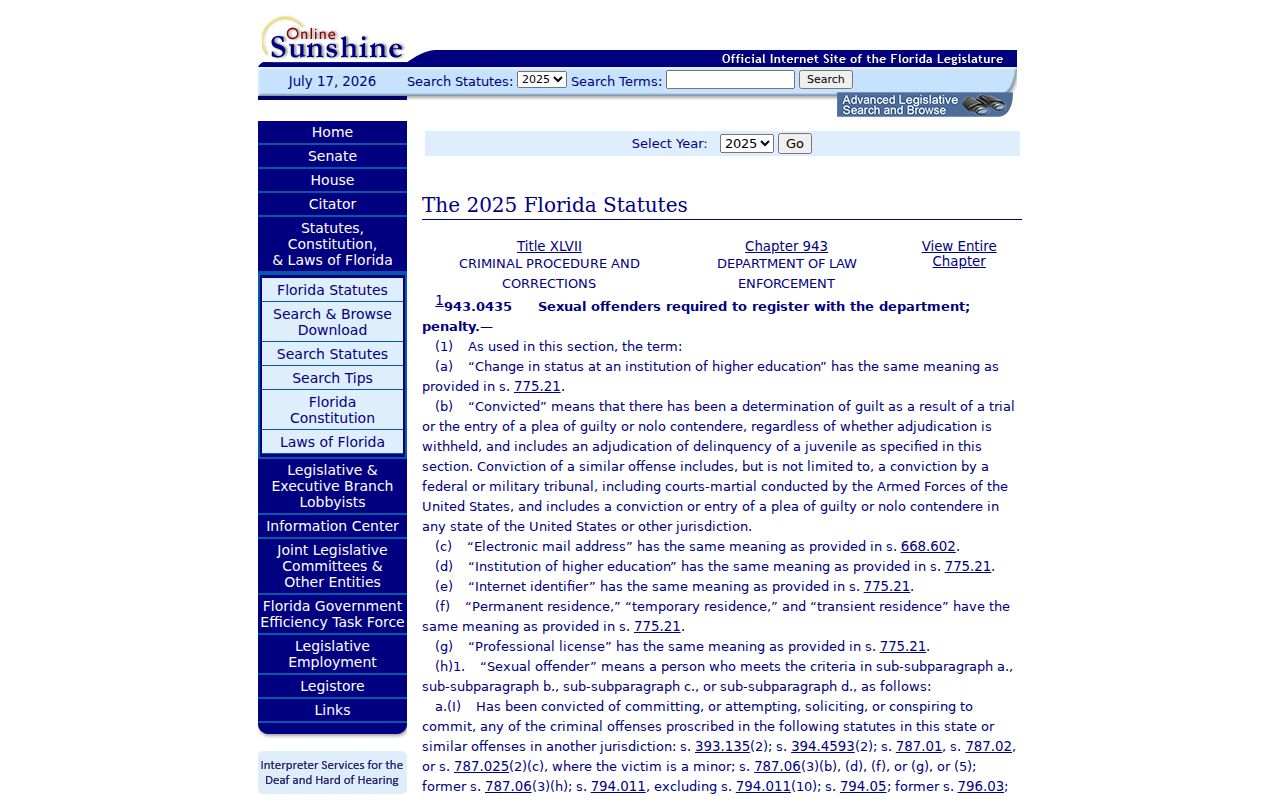
That law helps explain why changes in residence, vehicles, Internet identifiers, and other required facts can appear in the registry process.
The Florida Sexual Predators Act governs the predator designation and related notification duties.
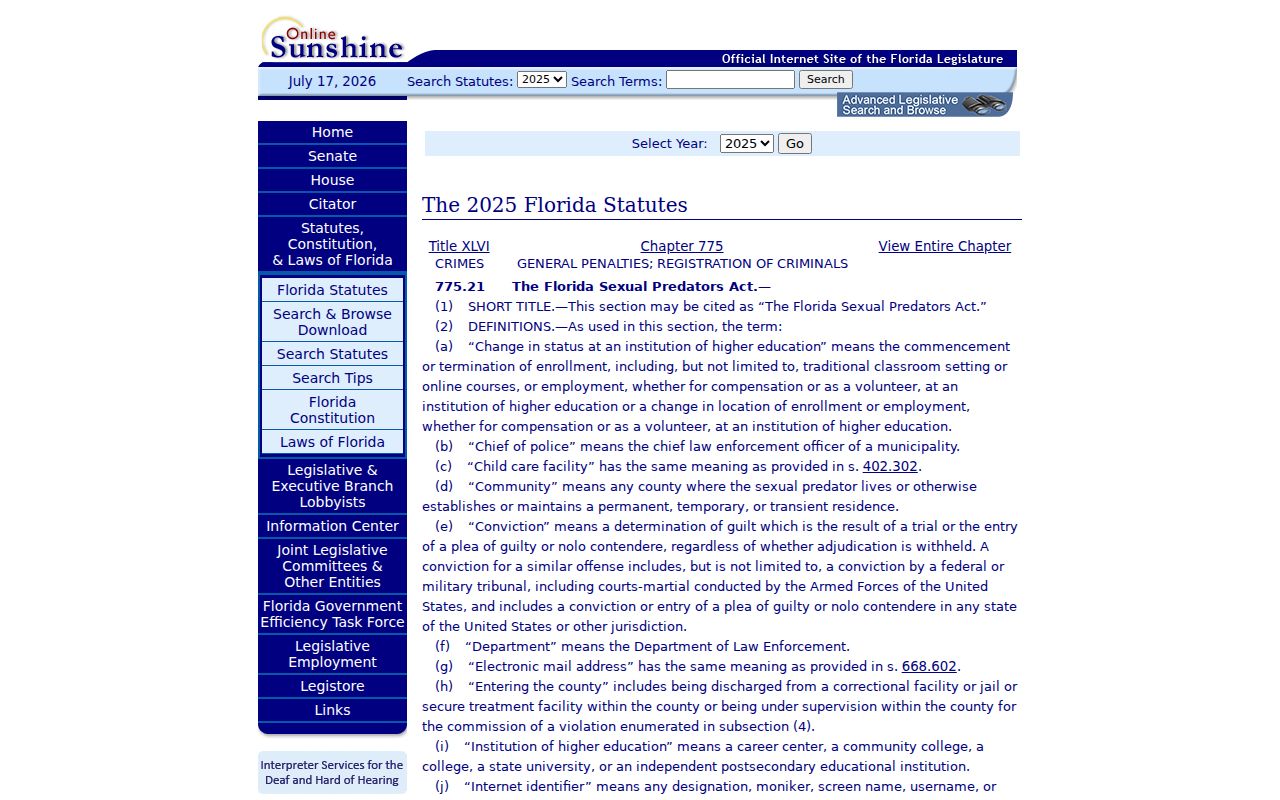
Its standards show why a Florida predator label should not be replaced with a federal tier or treated as a casual risk score.
Lawful Use and Citrus County Notification
Registry information supports personal and community safety planning. Florida Offender Alert accepts an email address and a monitored location, sends a confirmation step, and then gives notice when a qualifying registry address is reported nearby. Community notification can also come through law-enforcement notices and public portal data. Use those channels to stay informed, not to confront a listed person or household.
Residency questions need the same care. Florida restrictions can arise from state law and local rules, and a map’s distance alone does not decide whether a specific address is lawful. Ask CCSO about the current address-specific rule and let the agency investigate compliance. If a profile contains an old address or another factual problem, use the registry’s update-reporting route. Clear facts, such as the profile number, displayed address, and observation date, are more useful than assumptions about the person.
Community awareness works best as a repeat process. Save the confirmation from Florida Offender Alert, review notices against the live FDLE profile, and check the profile's photo date and address date before acting on an email. Families can adjust ordinary safety plans without publishing a registrant's details or urging others to make contact. For a possible emergency, call law enforcement. For a data concern, use the reporting channel shown on the official profile.
Misuse is a crime: Florida Statutes sections 943.0435 and 775.21 prohibit using registry information to harass, intimidate, threaten, or commit a crime against a registrant or family. Report suspected noncompliance to CCSO or FDLE and never confront the person.